
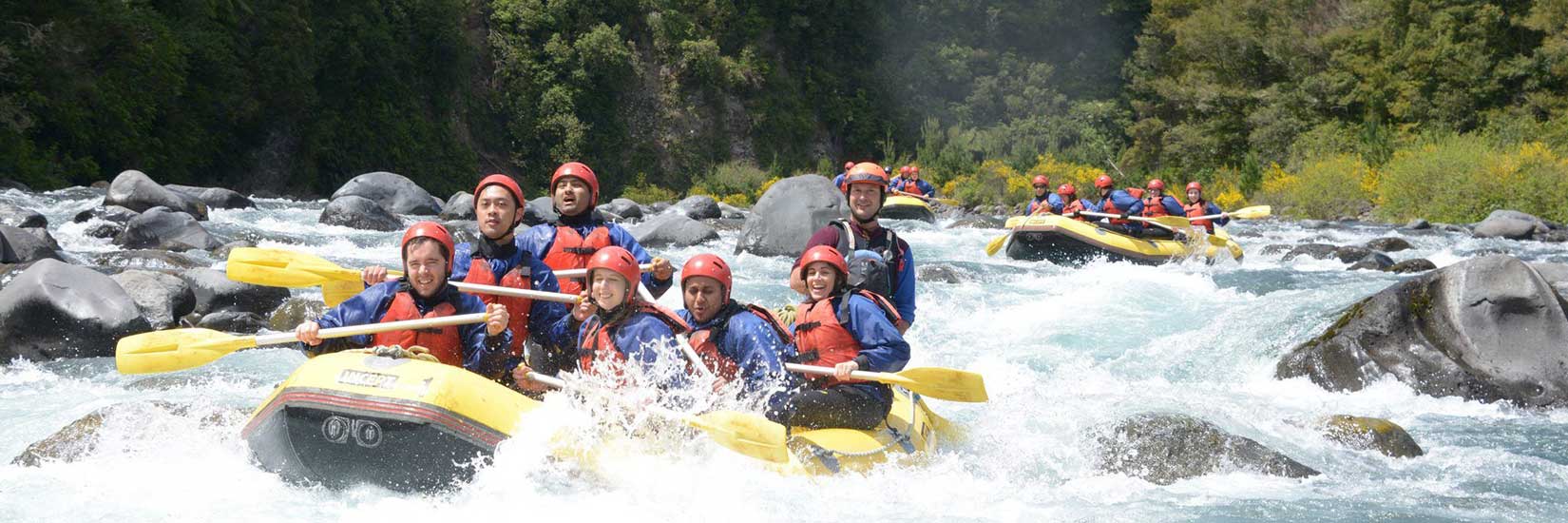

From deep forest gorges to alpine valleys, here are the most scenic rivers to raft in New Zealand, and how to choose the right trip for your level and itinerary.
What Makes a River Scenic for Rafting?
Every river has its own character, but the most scenic rafting rivers in New Zealand tend to share a few things in common:
- Clear water: glacial-fed or spring-fed flows that let you see rocks, fish and river features below the surface.
- Natural surroundings: native bush, canyon walls, waterfalls and minimal visible development.
- Varied features: a mix of rapids, pools, bends and side streams that keep the landscape changing as you travel downstream.
- Wildlife and birdlife: chances to spot trout, native birds and other local species.
If you are still weighing up regions, it may help to read our regional guides to rafting in the North Island and rafting in the South Island.
The Most Scenic Rivers to Raft in the North Island
The North Island combines lush native bush, volcanic landscapes and deep gorges, which makes for some very photogenic rafting days. These rivers are standouts for scenery.
Tongariro River (Tūrangi / Taupō)
Typical grades: Grade 2 to 3 • Trip style: Continuous rapids through a forested gorge.
The Tongariro River is one of New Zealand’s classic scenic rafting trips. You float and paddle through a deep, tree-lined gorge with rock walls, native bush, small waterfalls and crystal-clear pools. Trout are often visible beneath the raft and the feeling of being tucked below the surrounding landscape makes this river feel very special.
If you want a full white water experience, the Grade 3 section combines scenery with over 60 rapids in around 2 hours on the water. Families and younger paddlers can choose gentler family rafting options on lower grade sections.
See Tongariro white water rafting trips • See Tongariro family rafting options
Kaituna River (Rotorua)
Typical grades: Grade 4 to 5 • Trip style: Narrow, bush-clad gorge with waterfalls.
The Kaituna winds through a tight gorge lined with lush native forest, caves and mossy rock. Short, steep drops and the famous Tutea Falls make it one of the most dramatic looking rivers in the country. This is a short but powerful trip, ideal for confident participants who want to pair scenery with a big adrenaline hit.
Mohaka River (Hawke’s Bay)
Typical grades: Grade 2 to 4 • Trip style: Day and multi-day trips through remote gorges.
The Mohaka offers wide views, high cliffs and long, winding gorges that feel remote and wild. On calmer stretches you can sit back and take in the rock formations and native bush. Higher grade sections add bigger waves and more technical features but keep the big-sky scenery.
Rangitīkei River (Central North Island)
Typical grades: Up to Grade 5 in upper sections • Trip style: Blue water and canyon walls.
The Rangitīkei is known for its striking pale canyon walls and blue-green water. It feels enclosed and dramatic in places, with plenty of visual contrast between rock, bush and water. It suits rafters who want powerful rapids and scenery in the same day.
For a deeper dive into rivers and regions, see our full guide: White water rafting in the North Island.
The Most Scenic Rivers to Raft in the South Island
The South Island turns the scenery dial up with alpine valleys, big mountain backdrops and glacial-fed flows. These rivers are often highlights of a South Island road trip.
Kawarau River (Queenstown)
Typical grades: Grade 2 to 3 • Trip style: Big volume river with canyon sections.
The Kawarau is wide, powerful and framed by rocky canyon walls and hillsides. On many trips you move from open valley views into tighter gorges, with turquoise water that looks incredible in clear conditions. It suits first-time rafters and mixed groups who want to feel the scale of South Island rivers without pushing into the highest grades.
Shotover River (Queenstown)
Typical grades: Grade 3 to 5 • Trip style: Steeper alpine gorge.
The Shotover sits in a steeper, narrower gorge, with high rock walls, sharp bends and fast-moving water. It feels more enclosed and dramatic than the Kawarau. When you are not paddling through rapids there are still plenty of views of the surrounding mountains and canyon formations.
Rangitata Gorge (Canterbury)
Typical grades: Grade 2 to 5 depending on section • Trip style: Remote alpine gorge.
The Rangitata flows out of the Southern Alps and runs through deep gorges with big, rolling waves and powerful features. The surrounding countryside feels very open and alpine, with high peaks and wide valleys on approach, then tight canyon walls as you drop into the gorge proper.
Buller River (West Coast)
Typical grades: Grade 2 to 3 • Trip style: Bush-lined river with rock formations.
The Buller is a West Coast favourite, offering a mix of bush, rocky outcrops and clear pools. In many places the river sweeps around bends with steep banks and dense forest, so there is always something new to look at around the next corner.
To see how these rivers fit into the bigger picture, take a look at our dedicated guide to rafting in the South Island.
Choosing a Scenic Rafting Trip by Grade and Confidence
Scenic does not always mean extreme. You can choose a river and section that matches your comfort level and still get amazing views.
- Grade 1 to 2: Gentle, scenic rafting with small waves and lots of time to look around. Best for families, younger kids and cautious first-timers.
- Grade 3: Classic white water with regular rapids and flat sections between them. Great if you want excitement and scenery in equal measure.
- Grade 4 to 5: Strong, technical rapids with drops and powerful features. You still get fantastic scenery, but you will be more focused on paddling and listening to your guide.
If you want one trip that balances scenery and excitement in the North Island, the Tongariro Grade 3 section is hard to beat. For a gentler scenic experience with younger kids, Tongariro family rafting is a popular choice.
Best Time of Year for Scenic Rafting in New Zealand
You can raft in New Zealand throughout the year, but the look and feel of the rivers changes with the seasons.
- Summer (Dec to Feb): Warm air, long daylight hours and vibrant greens in the bush. Very popular for all grades.
- Autumn (Mar to May): Clear, crisp days and beautiful autumn colour in some areas, especially where there are deciduous trees near the river.
- Winter (Jun to Aug): Snow on the surrounding peaks in many South Island regions and clear water visibility. You will wear thicker wetsuits and extra layers.
- Spring (Sep to Nov): Fresh growth on the hillsides and stronger flows in some rivers as snow melts. Great if you like a bit more action.
On rivers like the Tongariro, flows are relatively consistent year-round, which makes it easier to plan a scenic rafting trip at any time of year.
Scenic Rafting for Families vs White Water Fans
Some rivers work well for both family-friendly rafting and more intense white water, often by using different sections of the same river.
- Families and younger kids: Look for Grade 2 to easy Grade 3 trips with longer scenic stretches and plenty of guide support. Tongariro family rafting and lower grade Mohaka sections are good examples.
- Mixed groups: Consider booking different trips on the same river, such as a family rafting option for some and a higher grade run for others. That way everyone meets back at base with stories to share.
- White water fans: Choose higher grade sections on rivers like the Kaituna, Rangitata or Shotover and enjoy the scenery in the quieter moments between rapids.
How Scenic Rafting Fits into Your NZ Itinerary
Rafting days are easy to plug into a wider New Zealand itinerary. In many regions you can pair a scenic river trip with other must-do experiences.
- Taupō and Tūrangi: Combine Tongariro rafting with lake activities, short walks, hot pools or a visit to Tongariro National Park.
- Rotorua: Add Kaituna rafting to a day of geothermal parks, mountain biking or forest walks.
- Queenstown: Pair Kawarau or Shotover rafting with hiking, jet boating, gondola rides or wineries.
- Canterbury and West Coast: Use Rangitata or Buller rafting as a highlight on a longer South Island road trip.
If you are looking for nationwide ideas, this overview is a good place to start: best white water rafting in New Zealand.
Ready to Choose Your Scenic River?
Whether you picture yourself drifting through a forested gorge on the Tongariro, dropping into an alpine valley on the Rangitata or threading between canyon walls near Queenstown, there is a scenic rafting river in New Zealand that will match your style.
For many visitors, the Tongariro River is the ideal starting point. It blends clear water, native bush and a long sequence of rapids into one unforgettable day on the North Island.
See Tongariro white water trips | See Tongariro family rafting options